Choosing a custom home builder is not only about comparing finished homes or price-per-square-foot estimates. The builder will influence how your property is evaluated, how the design responds to the lot, how costs are documented, how approvals are coordinated and how problems are handled during construction.
In Oakville, those decisions may involve zoning, mature trees, grading, demolition, servicing, Conservation Halton and, in some cases, the Committee of Adjustment. A builder should understand these issues before making firm promises about house size, price or schedule.
If you are comparing options, use this guide to evaluate each custom home builder in Oakville on evidence, process and project fit—not presentation alone.
Quick Builder Selection Checklist
- A current HCRA licence
- Proper Tarion registration and home enrolment
- Experience with comparable custom homes
- A property-specific feasibility review
- A detailed scope, including allowances and exclusions
- A clear construction contract and change-order process
- A realistic milestone schedule
- A named project manager or site supervisor
- Written budget and progress reporting
- Recent client references
- A documented inspection and quality-control process
- Clear warranty and handover procedures
1. Verify the Builder’s HCRA Licence
Start with information you can verify independently. Custom home builders working on an owner’s land in Ontario generally need the appropriate builder and vendor licensing through the Home Construction Regulatory Authority (HCRA). Do not rely only on a licence number shown on a website or proposal.
Search the company in the official Ontario Builder Directory. It can help you confirm:
- Current licence status
- Legal and operating names
- Related companies
- Years of activity
- Homes enrolled with Tarion
- Regulatory actions or conduct concerns
- Available warranty information
Make sure the company named in the directory is the same legal entity shown on the proposal and contract. A builder who avoids this question or pressures you to proceed as an owner-builder deserves additional scrutiny.
2. Confirm How Tarion Coverage Will Be Handled
HCRA licensing and Tarion warranty coverage are related but separate checks. Ask the builder to explain how your new home will be enrolled and what you will receive in writing.
- Will this home be enrolled with Tarion?
- When will enrolment take place?
- Which company will be identified as the builder and vendor?
- What enrolment and warranty documents will the homeowner receive?
- Who will conduct the pre-delivery inspection?
- How will warranty items be reported and tracked?
Tarion administers Ontario’s new-home warranty program. The builder’s answers should be specific to your project, consistent with the contract and documented before construction begins.
3. Look for Experience That Matches Your Property
A broad portfolio can be impressive without proving that the builder has handled the conditions affecting your lot. Ask for relevant projects, not only the most photogenic projects.
- Teardown and rebuild projects
- Homes in mature neighbourhoods
- Narrow or irregular lots
- Properties with protected trees
- Projects requiring minor variances
- Heritage-sensitive sites
- Waterfront or conservation-regulated properties
- High-performance or energy-efficient homes
- Homes with a comparable size and finish level
For each example, ask what the company’s actual role was, where the project was located, what the scope included, when it was completed and who managed it. A designer, construction manager and full design-build contractor may all show the same photographs while having very different responsibilities.
4. See What the Builder Checks Before Design Is Finalized
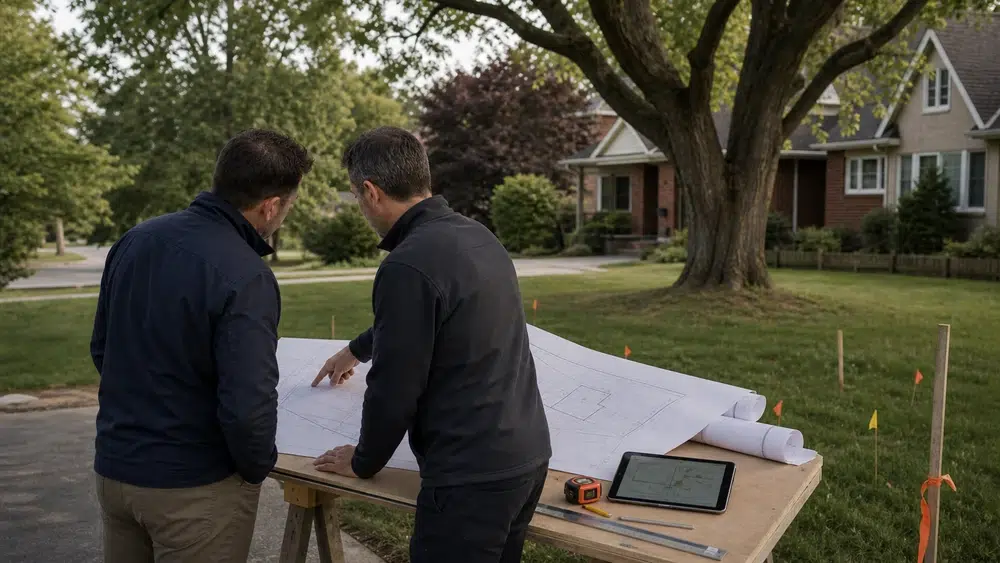
A builder should not promise a house size or fixed budget based only on frontage, lot area or a real-estate listing. Early feasibility work should identify the constraints that can materially change the design.
- Applicable zoning and site-specific exceptions
- Required setbacks
- Lot coverage, building height and massing
- Floor-area rules
- Grading and drainage
- Water, sewer, hydro and gas servicing
- Driveway and parking requirements
- Protected trees and root zones
- Demolition requirements
- Possible Conservation Halton involvement
- Heritage considerations
- Construction and equipment access
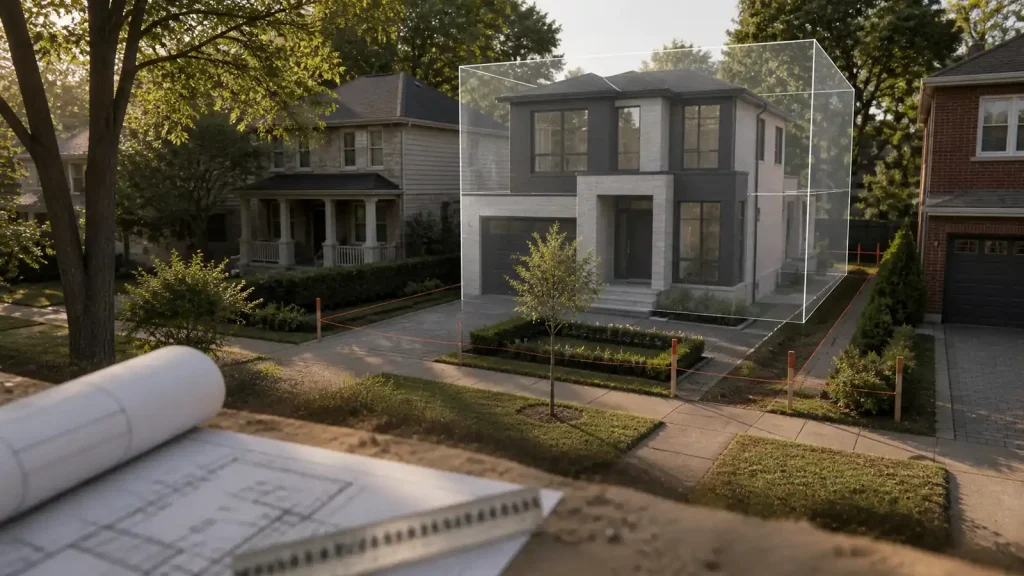
Oakville’s zoning information is a useful starting point, but the builder should translate the rules into a preliminary building envelope for the specific address. No responsible builder can guarantee a Committee of Adjustment approval; they can explain the risk, likely documentation and design alternatives.
5. Compare the Scope, Not Only the Total Price
Two proposals can show similar totals while covering very different work. Compare the documents behind the price and confirm whether each quote is based on the same drawings, specifications and finish assumptions.
A useful quote should clearly address:
- Drawings and specifications used for pricing
- Demolition and site preparation
- Excavation and foundation work
- Structural components
- Windows, exterior finishes and roofing
- HVAC, plumbing and electrical systems
- Insulation and building-envelope work
- Interior finishes and fixtures
- Allowances
- Exclusions
- Permits and consultant fees
- Landscaping, driveway and exterior work
- HST
- Any homeowner-supplied items
Use the custom home builder quote checklist to compare proposals line by line. A lower total is not a saving if required work has simply been left outside the scope.
6. Understand Allowances and Exclusions
An allowance is a placeholder, not a guaranteed final price. Ask enough questions to understand what standard of product or finish the allowance can realistically purchase.
- Which product or finish level was assumed?
- Does the amount include delivery and installation?
- Is tax included?
- What happens if the selection is above or below the allowance?
- Is a builder fee or markup added to the difference?
- When must the selection be finalized?
Review exclusions with the same care. The goal is not to eliminate every uncertainty before design is complete; it is to know which costs are included, which remain variable and which are entirely the homeowner’s responsibility.
7. Review the Contract and Change-Order Process
The contract should describe how the project will be delivered, paid for and documented. It should not rely on verbal explanations that disappear once construction starts.
- Detailed scope of work
- Payment milestones
- Project schedule
- Allowances and exclusions
- Builder fees and markups
- Insurance responsibilities
- Written change-order procedure
- Treatment of delays
- Dispute-resolution process
- Warranty responsibilities
- Substantial completion and final payment
Changes should be priced and approved in writing before the work proceeds whenever possible. The Xavieras guide to fixed price and cost plus construction contracts explains how the pricing model changes the homeowner’s cost risk and reporting needs.
Have an Ontario construction lawyer review the proposed contract before signing. This article is a selection checklist, not legal advice.
8. Identify Who Will Manage the Project
The salesperson or company owner may not be the person managing your home. Ask who will be responsible for daily coordination and how decisions will move from the homeowner to the site.
- Who is the main homeowner contact?
- Who is the site supervisor?
- How many projects will that person manage at the same time?
- How often are progress meetings held?
- Where are selections and decisions recorded?
- How are site issues documented?
- Who approves substitutions?
- Who can authorize a change in cost or schedule?
A strong process makes responsibilities visible. You should know who can answer a design question, who can stop incorrect work and who will provide the next budget or schedule update.
9. Ask How Schedule and Budget Are Tracked
A realistic schedule is normally organized by milestones rather than one promised completion date. It should distinguish design and approvals from the construction period.
- Design development
- Permit and approval submissions
- Demolition
- Excavation and foundations
- Framing
- Building enclosure
- Mechanical and electrical rough-ins
- Insulation and drywall
- Interior finishes
- Required inspections
- Pre-delivery inspection
- Final completion
Ask which long-lead items must be selected early and how weather, approvals, owner changes and product delays will be reported. Budget updates should show the original contract amount, approved changes, pending decisions, payments and forecast final cost.
10. Speak With Recent Clients
Recent references can reveal how the builder performs after the contract is signed. Ask questions that require more than a general statement that the client was happy.
- Was the original cost explained clearly?
- Were changes documented before work proceeded?
- How consistent was communication?
- Were problems raised early?
- How were schedule changes handled?
- Was the site organized and protected?
- How were deficiencies resolved?
- Would the client hire the builder again?
If possible, view both a completed home and an active construction site. The active site shows supervision, protection and organization; the completed home shows finish quality and how the builder handles handover.
Warning Signs When Comparing Builders
- Promising an exact house size before reviewing the property
- Guaranteeing a zoning or variance approval
- Pricing only by square foot without a defined scope
- Providing no schedule of allowances and exclusions
- Using a different company name in the contract than in the licence search
- Avoiding HCRA or Tarion questions
- Refusing to provide recent references
- Having no written change-order process
- Being unable to identify the site supervisor
- Pressuring you to sign before key documents are reviewed
One warning sign does not automatically disqualify a company, but it should lead to a clear answer and supporting documentation before you proceed.
Questions to Bring to the First Builder Meeting
- Is the contracting company currently licensed through HCRA?
- How will this home be enrolled with Tarion?
- Which completed Oakville projects are most similar to this property?
- What will you review before confirming design and budget?
- What is included, excluded and carried as an allowance?
- Who will manage the project and supervise the site?
- How are changes priced and approved?
- How often will we receive schedule and budget updates?
- What inspections and quality-control steps do you use?
- Can we speak with recent clients?
- What information do you need from us before preparing a reliable proposal?
- What are the largest unresolved risks on this property?
A strong builder should also identify important questions you have not asked. Their first meeting should improve your understanding of the project, not simply move you toward a signature.