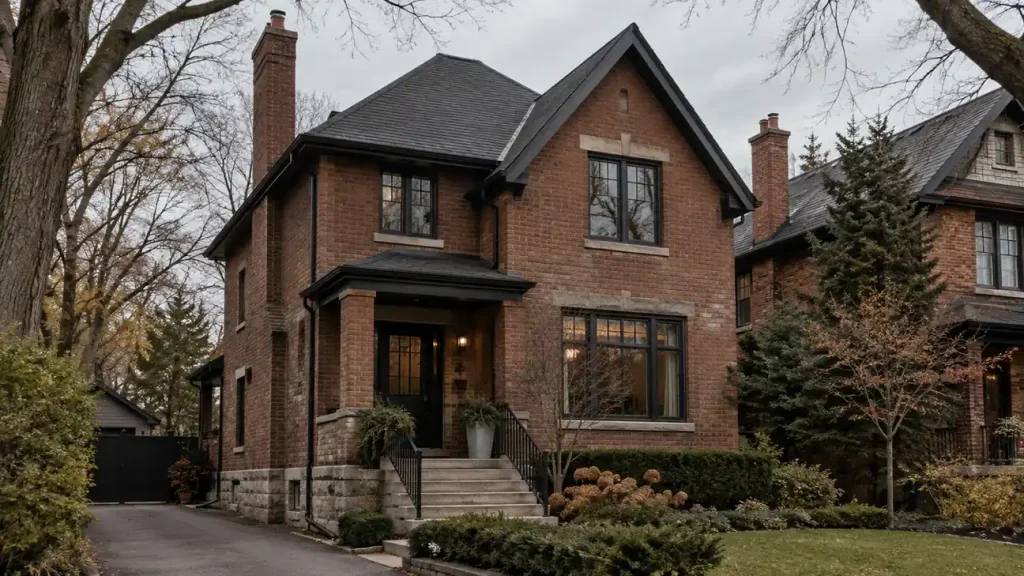
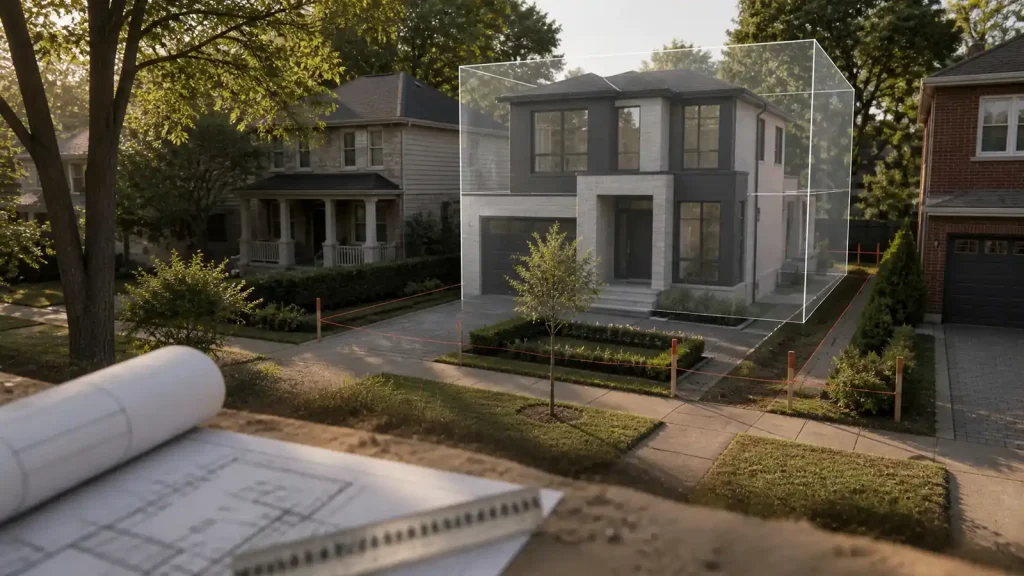
Budget surprises are one of the biggest concerns for homeowners planning a luxury custom home. The answer is not to make every decision cheap or freeze the design before it is understood. It is to use a custom home budget planning process that keeps scope, selections, changes, risk and reporting connected from the first feasibility discussion through construction.
A high-end home can include premium glazing, custom millwork, natural stone, sophisticated mechanical systems and detailed landscaping without becoming financially chaotic. What matters is whether the project team defines the all-in scope, updates the forecast as decisions become clearer and obtains approval before a change affects cost or schedule. Homeowners who still need a realistic starting range should first review Xavieras’ guide to custom home building costs in Toronto. This article addresses the next question: how do you keep that budget under control?
How Budget Surprises Begin Before Construction
Many overruns are set in motion while the drawings still look flexible. A concept may assume large spans, deep excavation, extensive glazing or highly customized interiors before those decisions have been tested against site conditions and an all-in budget. At the same time, the working estimate may omit design fees, permits, utility work, landscaping, appliances, window coverings or other move-in requirements.
The solution is a scope baseline: a dated record of what the current budget includes, excludes, assumes and has not yet resolved. It should distinguish the construction contract from the broader project and move-in costs. As design develops, each material decision should update that same baseline. Otherwise, the homeowner is comparing changing drawings with an old number and receiving false reassurance.
The Difference Between Expensive and Uncontrolled
A luxury home is expected to require a substantial investment. Premium windows, stone, millwork, mechanical equipment and skilled labour carry real costs. Expensive becomes uncontrolled when the homeowner cannot see why the forecast changed, which decisions caused the change or what remains exposed.
Consider a clearly hypothetical example. A homeowner may be comfortable proceeding with a $5 million all-in plan if that amount is established honestly and reflects the intended finish level. Trust breaks down if the homeowner is shown $3.8 million, commits to the design and later learns that essential scope, realistic allowances and move-in items were outside that early figure. The problem is not simply the higher number; it is the missing information and the lost opportunity to make choices while the design was still flexible.
Before accepting a budget, ask four direct questions: What is included? What is excluded? Which amounts are allowances? Which costs depend on further design, investigation or third-party decisions? If any answer is unclear, the number is not yet a reliable control document.
Allowances Must Be Realistic
An allowance is a placeholder for an item that has not been fully selected or specified. It can be reasonable early in design, but only if its basis matches the homeowner’s expectations. A cabinetry allowance based on standard modular units is misleading when the design conversation assumes full-height custom millwork. The same problem can arise with tile, plumbing fixtures, lighting, appliances, hardware and landscaping.
Each allowance schedule should name the item, describe the assumed quality or scope, state what the allowance covers and identify the date by which a selection is needed. Labour, delivery, taxes and installation should not be left ambiguous. A homeowner should also be able to see the budget effect of choosing above or below the allowance before approving the purchase.
Selections timing matters as much as the allowance amount. A late decision can affect procurement, rough-ins, shop drawings and the work of several trades. The best time to compare the allowance with the actual choice is before an order is placed and before dependent work is scheduled. Realistic allowances do not remove choice; they make the financial consequence of each choice visible.

Change Orders Are Not the Enemy; Unmanaged Change Is
Custom homes evolve. A family may refine a room, upgrade a finish, add technology or respond to a condition that could not reasonably be confirmed earlier. A written change order is the mechanism that keeps that decision clear. It should not be treated as evidence that the project has failed.
A disciplined change process records the request, the reason, the price, any allowance credit, the schedule effect and the party authorized to approve it. The builder should identify whether the change affects drawings, permits, engineering, procurement or another trade. Work should proceed only after the agreed approval step, except where the contract provides a specific process for an urgent condition. The construction agreement should define that process, and homeowners should obtain project-specific legal advice before signing or changing contractual terms.
A decision log is equally useful. It records options considered, the decision date, the responsible person and the deadline after which a change would create rework. This prevents a conversation, email and site instruction from becoming three different versions of the same decision.
Contingency Is a Sign of Professionalism
Contingency is not a miscellaneous spending account and it should not be used to make an incomplete estimate look complete. It is a controlled reserve for defined uncertainty. The appropriate amount depends on the design stage, project complexity, contract structure, investigation completed and remaining site risk. A generic percentage cannot replace a project-specific review.
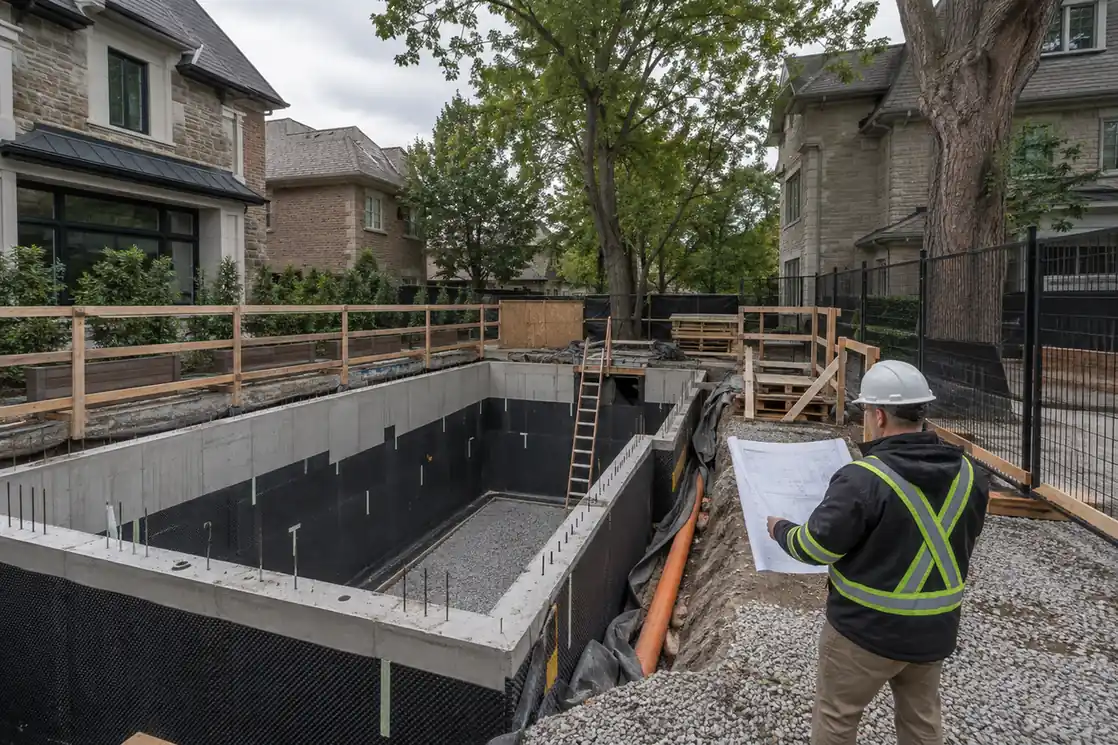
Toronto infill work can involve conditions that are difficult to confirm fully before construction, including soil and groundwater behaviour, existing services, concealed foundation conditions, waterproofing interfaces, utility coordination and constrained access beside neighbouring homes. Some risks can be reduced through surveys, investigation, engineering and early trade input. Others remain until excavation or demolition exposes the condition.
The contingency register should identify each material risk, the amount or range carried for it, what information could reduce the uncertainty and who can authorize use of the reserve. When a risk is resolved without spending, that allocation should remain visible rather than quietly being reassigned to upgrades. The goal is not to spend contingency; it is to keep a reasonable unknown from becoming a financial emergency.
Monthly Reporting Builds Confidence
A homeowner should not need to reconstruct the project’s financial position from invoices and individual emails. A useful monthly report brings the approved baseline, commitments, payments, approved changes, pending decisions, contingency movements and current forecast into one view. It should also show schedule consequences and selections due soon, because time and cost are rarely separate on a custom build.
The most important number is the forecast at completion: the team’s best current view of what the defined project will cost if known commitments and approved changes are carried through. That forecast should be reconciled with the prior report so the homeowner can see what changed and why. A custom home builder in Toronto should be able to explain the reporting format before construction begins, including how often it is issued and which supporting records are available under the chosen contract.
A Budget-Control System Needs Five Live Numbers
A single original estimate is not enough to manage a changing project. The following five figures create a concise control system that a homeowner and project team can review at every formal budget meeting.
| Budget measure | What it tells the homeowner |
|---|---|
| Approved baseline | The current authorized scope and budget against which changes are measured. |
| Committed cost | Contracts, purchase orders and approved work already placed with consultants, suppliers or trades. |
| Pending exposure | Unapproved options, unresolved selections and potential changes that could affect the forecast. |
| Contingency remaining | The reserve still available, including a record of every approved use and release. |
| Forecast at completion | The best current estimate of the defined project’s total cost, not merely the amount paid to date. |
These figures only work when design and construction information reaches the same system. If the architect revises a detail, the interior designer changes a selection or the homeowner approves an upgrade, the budget and schedule implications should be assessed together. Xavieras’ comparison of architect-led and design-build project structures explains why the timing of builder involvement can affect this coordination.
Practical Checklist for the Homeowner
- Clarify the true all-in budget before becoming committed to a design direction.
- Confirm zoning, permits, approvals and the likely project timeline early.
- Ask for a dated scope baseline with inclusions, exclusions, assumptions and unresolved items.
- Review allowances against the actual quality level, including labour, delivery, taxes and installation.
- Set selection deadlines that protect procurement, rough-ins and the construction schedule.
- Require written pricing and schedule implications before approving a change.
- Separate contingency for uncertainty from an upgrade budget for elective improvements.
- Ask for regular reporting that includes pending exposure and forecast at completion.
- Verify the builder and clarify who is authorized to approve financial decisions.
Builder due diligence is part of budget control because reporting is only useful when the company behind it is accountable. Review Xavieras’ guidance on how to check a builder’s reputation in Toronto, and confirm licensing through the HCRA Ontario Builder Directory. The directory is an official starting point; it does not replace references, contract review or project-specific due diligence.
Budget Control Questions Toronto Homeowners Often Ask
These questions should be resolved before the construction agreement and reporting process are finalized. The answers will vary with the property, design maturity and chosen contract.
Can a custom home be fixed price?
Some custom homes or portions of the work may use fixed pricing, but certainty depends on complete drawings, defined scope, realistic allowances, exclusions and a clear change procedure. A fixed-price label does not make undecided selections or concealed conditions disappear. Review the proposed agreement with qualified legal and construction advisers.
How much contingency should I carry?
There is no responsible universal percentage for every project. The reserve should reflect the design stage, investigation completed, site conditions, complexity and contract allocation of risk. Ask the team to connect each material contingency amount to a named uncertainty and explain how it may be released.
Why do budgets change during design?
Early drawings leave many quantities, assemblies and selections unresolved. As structural, mechanical and interior details develop, the team gains better information. Regular estimating at defined design milestones allows the scope to be adjusted before documents are complete and changes become expensive.
How can Xavieras help?
A pre-construction conversation can review the property, intended scope, budget, approval path and known construction risks before final pricing. It can also establish what information is still needed and how design decisions, allowances, changes and reporting should be coordinated for the project.
Start With a Budget You Can Manage, Not a Number You Hope For
Budget control begins before detailed drawings and continues through every selection, change and monthly forecast. If the property may also have severance or redevelopment potential, that option should be assessed before the preferred design and budget are fixed.
If you are considering a luxury custom home, major renovation, severance, or redevelopment project in Toronto or the GTA, Xavieras can help you understand what is possible before you commit significant money to design or construction. Book a private consultation to review your property, budget, goals, approvals, and development opportunities.