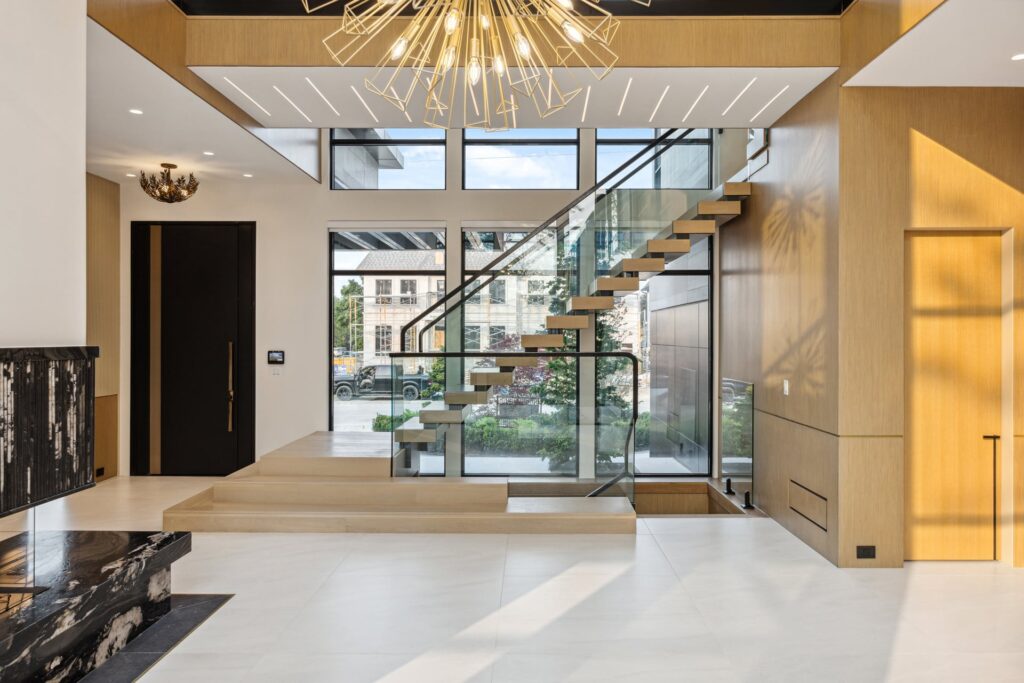
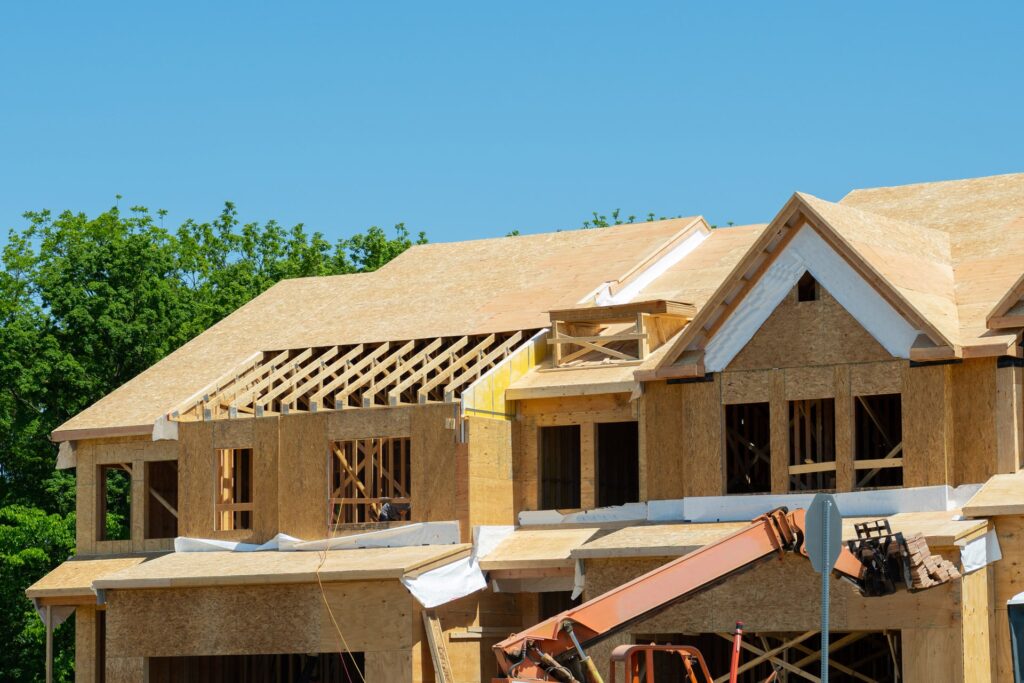
When people ask for the “standard” ceiling height in Ontario, they’re usually weighing what looks and feels best against what the Ontario Building Code requires as a minimum. In modern custom homes, the practical baseline is 9 ft on the main floor, about 9 ft upstairs, and a deeper poured basement so your finished lower level still feels open after drywall, flooring, and bulkheads. If you want a brighter, more upscale look, 10 ft on the main floor supports taller windows and 8-ft interior doors that instantly elevate the space. If you’re balancing budget and zoning, 9/9/8 ft (main/second/finished basement) still reads fresh and efficient. Because ceiling height touches structure, stairs, window schedules, and HVAC, lock heights early during your first meeting with a custom home builder in Toronto . For ballpark cost impacts, skim our 2025 custom home building costs in Toronto and explore what’s possible with Xavieras Custom Homes.
Quick Planning Guide
| Area / Storey | Common Choice | Feels Like | Good For | Watch Outs |
|---|---|---|---|---|
| Main floor | 9 ft | Modern, airy | Family rooms, kitchens, dining | Window/door proportions look balanced; easy on budget |
| Main floor (premium) | 10 ft | Brighter, “custom” | Statement great rooms, wider lots | Taller windows/8-ft doors; more stair risers; structure/HVAC coordination |
| Second floor | 9 ft | Airy, comfortable | Bedrooms, hallways, lofts | Keep door/trim consistent with main floor |
| Second floor (compact) | 8–9 ft | Cozy to modern | Smaller homes, tight zoning | Use lighter finishes + good lighting to keep rooms bright |
| Basement (finished) | 8–9 ft net | True living space | Media rooms, gyms, suites | Pour deeper to keep headroom after bulkheads; route ducts smartly |
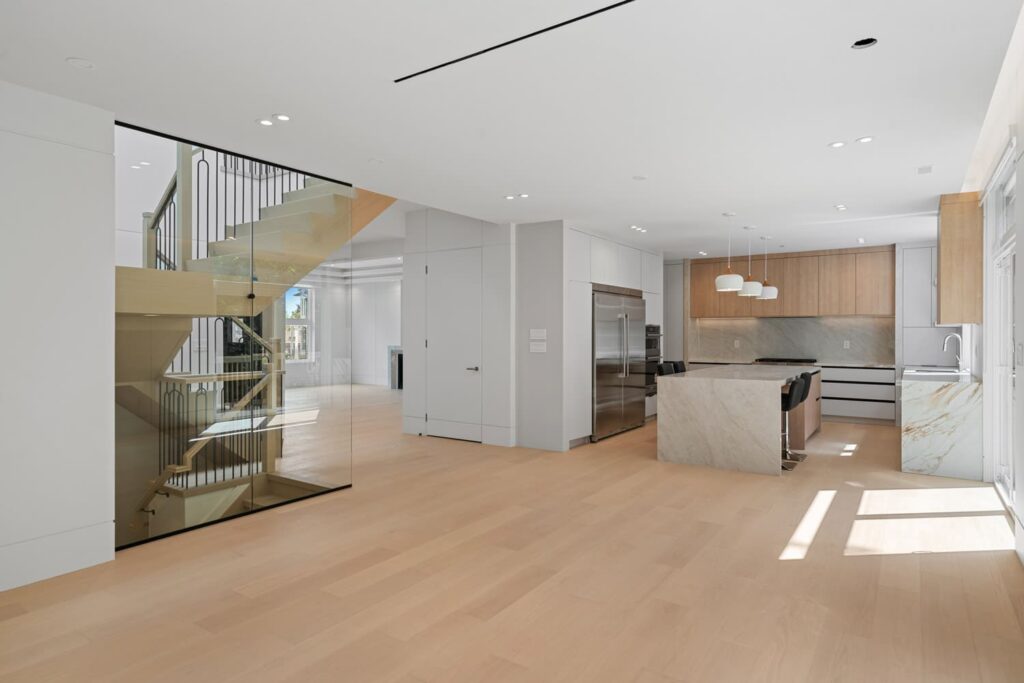
Ceiling Styles
High ceiling
A taller flat ceiling—often 10–11 ft on the main floor. Rooms feel brighter, windows get taller, and 8-ft interior doors look “right.” Use layered lighting and efficient HVAC zoning to keep comfort and acoustics dialed in.
Cathedral ceiling
Two equal slopes meet at a ridge (often following the roofline). It brings instant drama to great rooms or a primary suite and pairs beautifully with beams or a statement chandelier. Plan acoustics and air distribution early.
Vaulted ceiling
An umbrella term for any ceiling that rises above flat (cathedral, shed/single-slope, or barrel). Use it in selected areas to create volume without raising the entire floor.
Waffle (coffered) ceiling
A gridded pattern of beams or drywall coffers that adds depth and a premium look—popular in great rooms, studies, and dining rooms. It shines with 9–10 ft heights and can discreetly integrate LED lighting.
Sloped ceiling
A single angled plane, common on top floors under the roof. It gives character to bedrooms and lofts; balance it with smart window placement and lighting so the room reads bright and proportionate.
| Ceiling Style | What It Is | Best Rooms | Works Best With | Design Tips |
|---|---|---|---|---|
| High ceiling | Tall flat ceiling (10–11 ft) | Great rooms, main living | Wider floor plans | Pair with 8-ft doors, taller windows, layered lighting |
| Cathedral | Two equal slopes meeting at a ridge | Great rooms, primary suites | Open-concept layouts | Consider beams and statement lighting; plan HVAC early |
| Vaulted | Any raised/angled form (shed/barrel) | Living rooms, stair halls | Select feature zones | Use sparingly for drama; keep sightlines cohesive |
| Tray | Center steps up in one or more levels | Dining, bedrooms, halls | 9–10 ft rooms | Add cove lighting; keep trim clean for a modern look |
| Waffle (coffered) | Grid of beams/coffers | Great rooms, offices | 9–10 ft rooms | Scale the grid to room size; integrate discreet LEDs |
| Sloped | Single angled plane under roof | Top-floor beds, lofts | Dormers/skylights | Balance with glazing; add sconces and uplights |
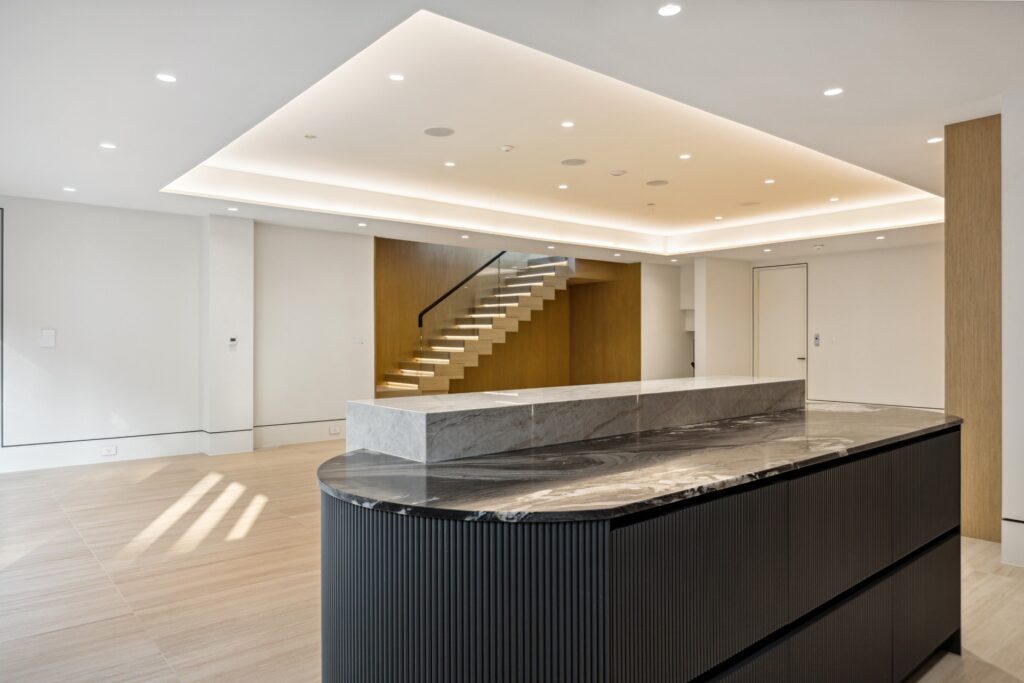
How to choose your heights (without overbuilding)
If you want maximum value, 9 ft main + 9 ft second + a comfortable finished basement is a safe, modern baseline buyers recognize. If your vision leans luxury, 10 ft main + 9 ft second + a deeper poured basement delivers impact and better proportions for tall windows, trim, and cabinetry. You can also keep most rooms efficient and create one or two memorable feature spaces with a tray, cathedral, or vaulted treatment—so you get the wow factor without pushing costs everywhere.
Before you finalize drawings
Lock heights early. Heights affect joist depth, stair counts, and window head heights—confirm before structural drawings.
- Coordinate HVAC. Higher volumes need smart diffuser placement and zoning for even comfort.
- Plan millwork and lighting. Tall ceilings look best with proportionate cabinetry, doors, and layered lighting.
- Think resale. Volume sells: 10-ft main floors and 9-ft second floors are read as “custom” at a glance.
Planning a new build with a custom home builder Toronto? Our team clarifies standard ceiling height Ontario from day one and aligns ceiling height custom home Toronto choices with your floor plan, style, and budget. Whether you prefer 9 foot ceilings Toronto for a clean modern feel, signature spaces with 10 foot ceilings Ontario, or a smarter basement ceiling height Ontario that hides bulkheads and still feels open, we map every detail with a luxury home builder Toronto approach—taller window head heights, proportionate 8-ft doors, layered lighting, and efficient HVAC zoning. From elegant tray ceilings and premium waffle ceilings to dramatic cathedral and vaulted ceilings, even sloped ceilings on the top floor, we help you choose the right look for comfort, function, and long-term resale value—without overbuilding
It’s legal and can feel cozy in small rooms, but most buyers expect 9 ft or more on the main floor today.
A bit, but smart HVAC design (zoned heat pumps, better air distribution) offsets most of it. Comfort and acoustics matter just as much as height.
You can still create volume with select vaults, taller windows, or feature ceilings in a few key rooms.
Before architectural/structural drawings are finalized—heights affect joist depth, stair design, window schedules, and mechanical runs. Start with a builder consultation.
Taller ceilings let you raise window head heights and use 8-ft interior doors, which improves proportions and natural light. Plan these with your builder so framing, trim, and costs stay aligned.