Designing a custom home means you get to design your comfort. In Ontario’s long, cold winters, the heating system you choose shapes warmth, energy bills, air quality, noise, and even resale value. This guide explains the top options in plain language—what they are, when they shine, and what to plan for—so you can choose with confidence. If you want a builder’s perspective from day one, start by speaking with a custom home builder in Toronto
Start with the building, not the heater
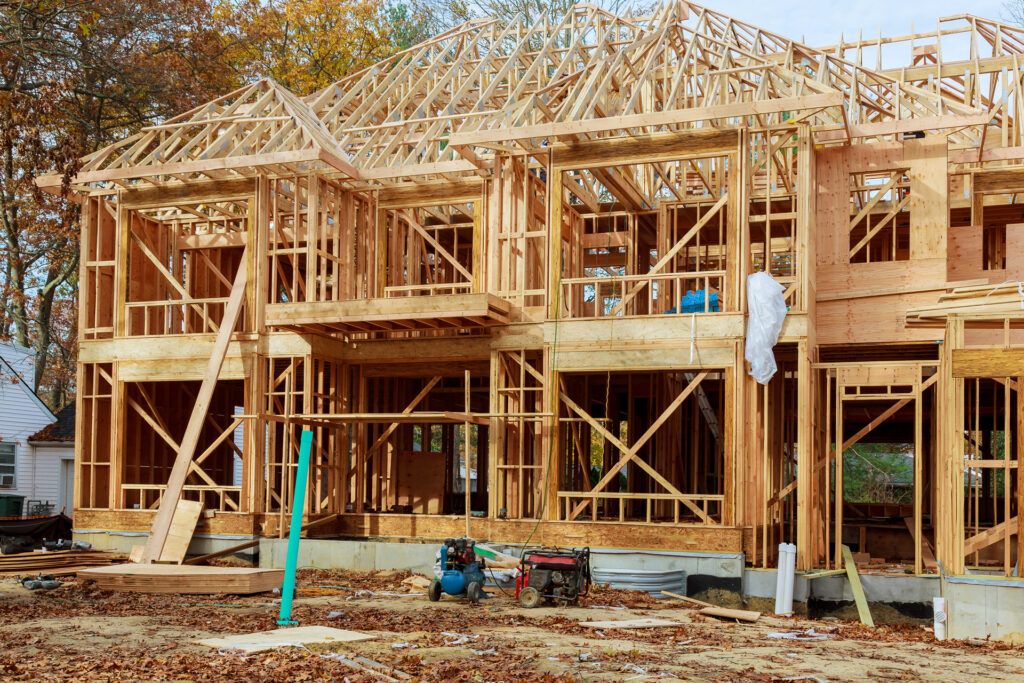
Before picking equipment, lower the amount of heat your house needs.
- Add high-R insulation and seal air leaks carefully.
- Choose high-performance windows and doors to reduce cold spots.
- Include balanced fresh air with an HRV/ERV and MERV-13 filtration.
- A better envelope lets you install a smaller, quieter system that runs more efficiently and keeps temperatures even across rooms.
Option 1: Cold-climate air-source heat pump (ASHP)
An all-electric system that moves heat from outdoor air into your home, even in sub-zero weather. In summer it reverses to provide air conditioning.
Why choose it
- One system for heating and cooling
- Low operating costs and low on-site emissions (Ontario’s grid is relatively low-carbon)
- Future-ready and solar-friendly
Plan for
- Proper heat-loss/heat-gain calculations to size it right
- Smart zoning for multi-storey homes and open-to-below spaces
- Quiet outdoor unit placement with snow clearance in winter
- Sufficient electrical capacity in your panel
Best fit
- Most new custom homes aiming for efficiency, simplicity, and all-electric operation.
Option 2: Dual-fuel (hybrid) heat pump + high-efficiency gas furnace
A heat pump handles most of the season efficiently; a condensing gas furnace takes over on the coldest days.
Why choose it
- Comfortable and efficient in every temperature range
- Lower gas use than furnace-only setups
- Familiar service network with a built-in “deep-cold” safety net
Plan for
- A smart switchover temperature so controls pick the most efficient source
- Annual tune-ups for both pieces of equipment
- Good duct design to keep all rooms balanced
Best fit
Homeowners who want high efficiency but prefer a gas backup for extreme cold snaps.
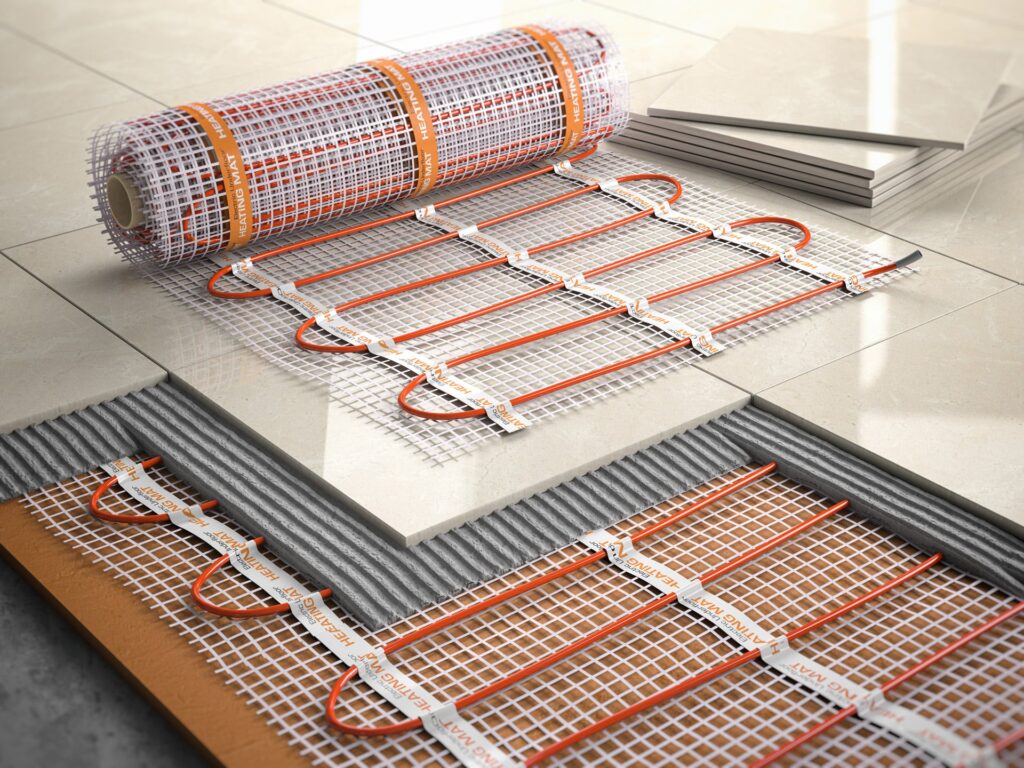
Option 3: Hydronic radiant in-floor heating
Warm water circulates through tubing in the floor for gentle, silent heat. It can be powered by a high-efficiency gas boiler or an air-to-water heat pump (all-electric).
Why choose it
- Luxury comfort with warm floors in kitchens, ensuites, and basements
- Very even temperatures without drafts or fan noise
- Room-by-room zoning
Plan for
- A small ducted system for cooling, filtration, and fresh air (radiant is for heat)
- Early coordination: floor build-ups, manifold locations, and floor coverings (tile/stone are ideal)
- Low water temperatures for efficiency, especially with heat pumps
Best fit
Homes prioritizing “feel”—spa-like comfort and quiet—especially with tile/stone floors and open layouts.
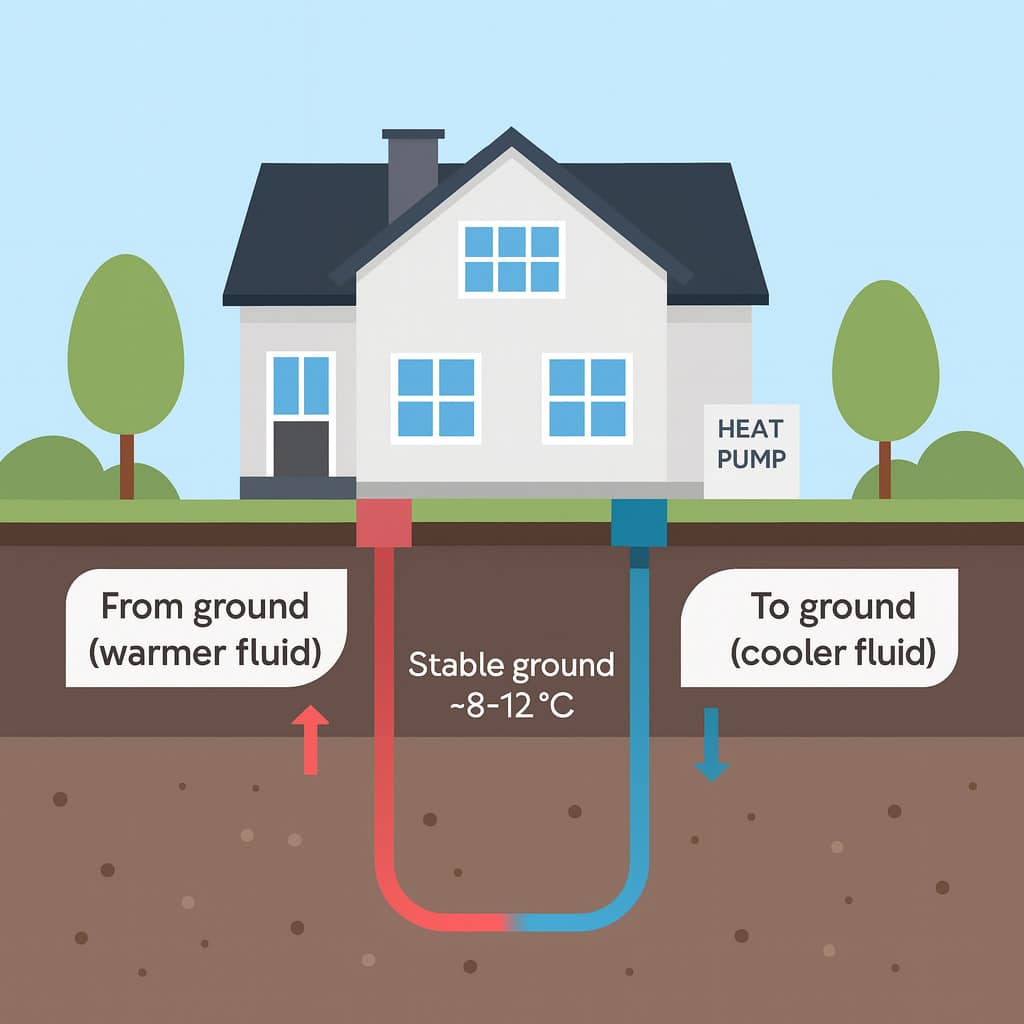
Option 4: Geothermal (ground-source) heat pump
A heat pump that exchanges heat with the ground using buried loops, taking advantage of stable earth temperatures.
Why choose it
- Top seasonal efficiency for both heating and cooling
- Very quiet indoors and outdoors; long loop lifespan
- Excellent with radiant floors or air handlers
Plan for
- Higher upfront cost for drilling or trenching
- Yard access and early design coordination
- Best payback if you’ll live in the home long-term
Best fit
Larger lots and “forever homes” aiming for the lowest lifetime operating cost.
Option 5: High-efficiency gas furnace (with AC or heat-pump-ready coil)
A familiar system using a condensing gas furnace for heat and a separate AC for cooling (or a coil sized for a future heat-pump swap).
Why choose it
- Lower upfront cost
- Widespread trade familiarity and quick service
- Straightforward controls and maintenance
Plan for
- Higher operating emissions than heat pumps
- Design it “heat-pump-ready” so you can electrify later without redoing ductwork
Best fit
Budget-first builds that still want reliable comfort and an upgrade path.
Comparison table (Ontario focus)
| System | Heating + Cooling | All-Electric | Comfort Feel | Upfront Cost | Operating Cost | Noise | Best For | Notes |
|---|---|---|---|---|---|---|---|---|
| Cold-Climate Air-Source Heat Pump (ducted/ductless) | Yes | Yes | Even temps, quick response | $$$ | $$ | Low | Most new custom homes | Needs correct sizing, zoning, and outdoor unit placement; solar-friendly |
| Dual-Fuel Hybrid (Heat Pump + Condensing Gas Furnace) | Yes | Partial | Very even, reliable in deep cold | $$$ | $$ | Low | Efficiency with cold-snap backup | Smart switchover temp optimizes cost and comfort |
| Hydronic Radiant In-Floor (Air-to-Water HP or Gas Boiler) | Heat only (needs air system for cooling) | Yes with A2W / No with gas | Silent, warm floors, zoned | $$$–$$$$ | $$ | Very low | Luxury comfort, tile/stone floors | Pair with small ducted system for cooling, filtration, and HRV/ERV |
| Geothermal (Ground-Source Heat Pump) | Yes | Yes | Very even, ultra-quiet | $$$$–$$$$$ | $ | Very low | Larger lots, long-term homes | Requires drilling/trenching; best ROI over long ownership |
| High-Efficiency Gas Furnace + AC (or HP-ready coil) | Yes (with AC) | No | Familiar, quick heat | $$ | $$$ | Low | Budget-driven builds with upgrade path | Consider heat-pump-ready coil for future electrification |
Key: $ = lower, $$$$ = higher. Actuals depend on house size, envelope, and equipment tier.
How to choose for your home
- One simple, efficient system: Cold-climate air-source heat pump
- Best “feel” underfoot: Hydronic radiant in key zones + small ducted system
- Lowest lifetime running cost on larger lots: Geothermal
- Efficiency with a safety net for extreme cold: Dual-fuel hybrid
- Lower upfront today with a path to electrify later: High-efficiency furnace sized and ducted for a future heat pump
Design and commissioning checklist
- Do load calculations (heat loss/heat gain) from your drawings before selecting equipment
- Plan duct or pipe routes early; allow space in the mechanical room
- Include HRV/ERV for healthy, efficient ventilation year-round
- Specify MERV-13 filtration and winter humidification if needed
- Right-size equipment to avoid short cycling and noise
- Commission the system: verify airflow, refrigerant charge, loop balances, and control programming
Common mistakes to avoid
- Picking equipment before improving insulation and airtightness
- Oversizing “just to be safe” (leads to uneven temps and higher costs)
- Forgetting return paths for closed-door bedrooms
- Mixing floor coverings over radiant without adjusting loop design and temperatures
- Skipping commissioning after installation
What about budgeting the mechanicals?
Allowances vary by size and spec. For a planning baseline, review our 2026 custom home building costs
and ask us to tailor a line-item for your drawings.
There isn’t a single “best” heater—there’s a best-fit system for your design, envelope, and comfort goals. In Ontario, most modern builds excel with a cold-climate heat pump for simplicity and efficiency, a radiant-plus-air combo for premium comfort, and geothermal for long-term, low-cost operation on larger lots. Start with the envelope, design the distribution, right-size the equipment, and insist on commissioning. Do that, and your custom home will be warm, quiet, and efficient for years.