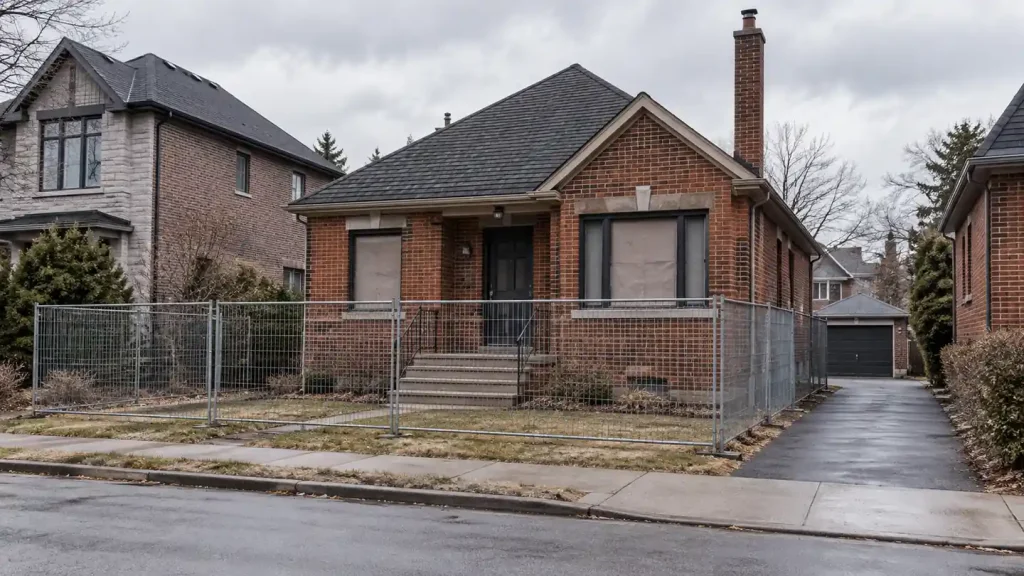
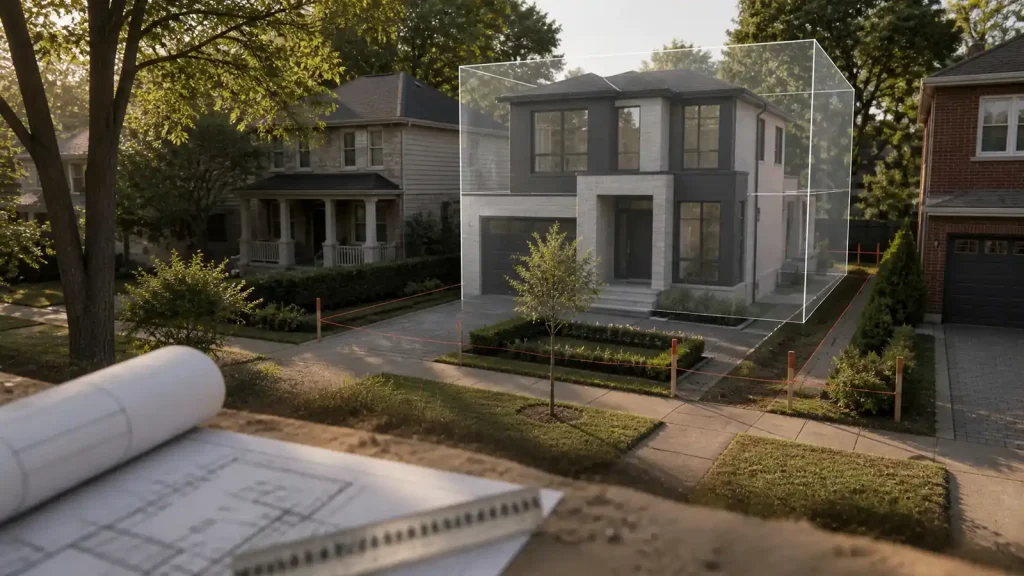
In Toronto, an older house on a large lot can look like an easy teardown. For many buyers, that is the appeal: buy the property, demolish the structure or planning to rebuild with a custom home builder in Toronto.
Sometimes that works. Sometimes it does not.
If the property is heritage-listed, heritage-designated, or located within a Heritage Conservation District, the rebuild process may be slower, more restricted, and more expensive than expected. Demolition may require review. Exterior changes may be limited. A replacement building may need to fit a heritage context even if the existing house itself is not individually designated.
That is why heritage needs to be checked early—ideally before an offer becomes firm.
Quick Takeaways
- Heritage restrictions in Toronto are real and enforceable.
- A property can be affected even if it is not a famous historic building.
- Listed, designated, and HCD properties carry different levels of risk.
- Demolition is usually hardest on designated properties.
- Buyers should review heritage status before assuming a house can be rebuilt.
Why Heritage Matters Before You Buy
The biggest mistake buyers make is treating heritage as a detail to look at later.
By that point, the deal may already be firm, design money may be spent, and the rebuild plan may be built around assumptions that do not hold up once the City becomes involved.
In practical terms, heritage status can affect:
- whether demolition is realistic
- how a new building must be designed
- whether original exterior elements must be kept
- how long approvals may take
- how much consultant and construction costs may increase
For a buyer, builder, or investor, those are not small issues. They go straight to timing, budget, and project feasibility.
What Counts as a Heritage Property in Toronto?
Not every heritage-affected property is treated the same way. In Toronto, three categories matter most:
- Listed properties
- Designated properties
- Properties inside a Heritage Conservation District
The difference between them matters because the approval path is not the same in each case.
Listed properties
A listed property appears on the City of Toronto’s Heritage Register because it has been identified as having potential cultural heritage value or interest.
That does not give it the same level of protection as a designated property. Still, listed status should not be brushed aside. If demolition is proposed, the City may take a closer look at the building and may consider whether formal designation is warranted.
That can create delay, uncertainty, and extra cost at exactly the stage when a buyer was expecting a straightforward teardown.
Designated properties
A designated property has formal legal protection under the Ontario Heritage Act. This is the category that usually creates the greatest difficulty for demolition or major exterior change.
Designation is tied to identified heritage value and specific protected attributes. Depending on the property, those attributes may include the façade, masonry, windows, roof form, porch, trim, scale, or—in some cases—interior features.
Once a property is designated, the building cannot simply be treated as disposable because it no longer suits a modern layout or custom-home vision.
Properties inside a Heritage Conservation District
A Heritage Conservation District, or HCD, protects the character of an area rather than just one building.
That area might be a street, a block, or a larger historic neighbourhood. A house inside an HCD may face heritage review even if it is not individually designated.
In these cases, the City may focus on how proposed work affects the broader setting: height, massing, rooflines, materials, setbacks, streetscape rhythm, and the building’s relationship to nearby properties.
Listed vs. Designated vs. HCD
| Heritage Status | What It Means | Typical Rebuild Risk |
|---|---|---|
| Not listed or designated | No clear individual heritage status, though zoning and other controls still apply | Lower heritage risk |
| Listed | Identified on the Heritage Register as having potential heritage value | Moderate risk; demolition may trigger review |
| Designated | Formally protected under the Ontario Heritage Act | Higher risk; demolition and major changes usually face closer scrutiny |
| Inside an HCD | Located in a protected heritage area | Varies by district plan and proposed design |
A modest older house can still create major heritage issues. It does not need to be a landmark building for the project to become more complicated.

Can You Demolish and Rebuild a Heritage Property in Toronto?
Sometimes, yes. Automatically, no.
That is the most honest short answer.
Heritage status does not always block redevelopment, but it does change the way the City looks at demolition and replacement buildings. The question is usually not just whether the existing structure is old or inconvenient. It is whether the building, or the area around it, has heritage value that should be conserved.
Designated properties are the hardest to demolish
If a property is designated, demolition is usually the most difficult route. The City may ask whether the structure can be retained, adapted, or incorporated into a revised design.
A desire for a larger custom home, a more modern layout, or a more profitable build is rarely enough on its own to justify removing a protected building.
Listed properties can still become a problem
This is where buyers often get caught off guard.
A listed house may look like a manageable teardown because it is not yet designated. But once demolition is proposed, the City may review its heritage value more closely. In some situations, that review can change the direction of the project.
Even if demolition is eventually allowed, time and money may be lost in the process.
Inside an HCD, the replacement design matters
In a Heritage Conservation District, a replacement building may be judged not only on what is being removed, but on what is being built in its place.
A new house that is significantly taller, bulkier, flatter, or more visually dominant than nearby buildings may face resistance, even if the design is technically permitted in other planning terms.
That does not mean new construction has to imitate old architecture. It does mean the design has to show some understanding of its setting.
If Full Demolition Is Not Supported
When a complete teardown is unlikely to be approved, there may still be other paths forward.
Common alternatives include:
- Renovation of the existing building, sometimes through a full home renovation that updates the structure, layout, and core systems
- Partial retention, where less significant portions are removed but important areas remain
- Facade retention, where the street-facing elevation is kept and new space is built behind it
- Rear or side additions designed to remain secondary to the original structure
- Adaptive reuse, where the building is updated without erasing the elements that give it heritage value
Not every option fits every site. Still, a property that does not work as a clean teardown may work well as a more carefully planned redevelopment.
Heritage Restrictions Are Not Just About Demolition
Many owners run into heritage rules long before they ever think about taking down a building.
Replacing windows, removing a porch, changing cladding, adding a dormer, enlarging openings, or building a visible rear addition can all raise issues on a heritage-affected property.
In most cases, the most sensitive changes are the ones visible from the street. That is because heritage review often focuses on how a building contributes to the public realm and the character of the block.
Exterior changes usually get the most attention
Common elements that may matter include:
- front façades
- brick, stone, and wood trim
- original window and door openings
- porches and steps
- rooflines and dormers
- visible side elevations
- decorative detailing
From a construction perspective, some of these changes may seem minor. From a heritage perspective, they may affect the character-defining parts of the building.

Additions are possible, but they need restraint
Many heritage properties can accommodate additions. The issue is usually not whether new space is allowed, but whether the addition overwhelms the original building.
Rear additions tend to be easier than front-facing ones. Upper-storey additions often need setbacks or design adjustments so the historic portion still reads clearly from the street.
Scale, massing, visibility, and materials all come into play.
Interior work may be easier—but check first
Interior renovations are often less restricted than exterior work, especially for ordinary residential properties. But “often” does not mean “always.”
If a designation identifies interior heritage attributes, those features may also be protected. Before gutting an older designated building, it is worth confirming exactly what the designation covers.
How the Approval Process Usually Works
The process depends on the property and the scope of the proposal, but the general sequence is fairly consistent.
1. Check the Heritage Register
Start by confirming whether the property is on the Toronto Heritage Register and whether it is listed, designated, or located in an HCD.
2. Review the relevant documents
For a designated property, that usually means the designation by-law and statement of cultural heritage value. For an HCD property, it means the district plan and guidelines.
These documents help answer the questions that matter most: what is protected, what kind of change may be acceptable, and what parts of the building or setting are most sensitive.
3. Get early advice
Before investing heavily in design, it is often worth speaking with the right professionals. Depending on the file, that may include a heritage consultant, planner, architect, engineer, or lawyer.
A short early review can save months of redesign later.
4. Prepare the submission
More sensitive projects may require drawings, site plans, existing-condition photos, material information, and sometimes a Heritage Impact Assessment.
Where demolition or major alteration is involved, the quality of the submission matters. Weak documentation usually creates delay rather than flexibility.
5. Coordinate heritage with zoning
Heritage approval and zoning approval are separate issues.
A proposal can satisfy one and still fail on the other. Height, setbacks, lot coverage, floor space, parking, and similar zoning issues need to be reviewed alongside heritage from the beginning—not after the design is already fixed.
What This Means for Cost and Timing
Heritage status is not just a design concern. It can affect the economics of the deal.
Common impacts include:
- longer approval timelines
- added consultant fees
- more redesign work
- higher restoration or selective demolition costs
- construction sequencing complications
- greater uncertainty around final scope
Older buildings also tend to come with hidden conditions. Once walls, foundations, or finishes are opened, the gap between the paper plan and the actual building can get expensive very quickly.
That is one reason heritage projects often cost more than buyers expect at the acquisition stage.
What Buyers, Builders, and Investors Should Do First
If the plan involves a teardown, major renovation, or custom rebuild, the due diligence needs to happen early.
A practical approach looks like this:
- confirm whether the property is listed, designated, or inside an HCD
- read the actual heritage documents instead of relying on assumptions
- compare the site’s constraints with the intended project strategy
- get early input from qualified professionals if the property raises concern
- use conservative timelines and budgets rather than best-case assumptions
Some heritage properties are poor redevelopment candidates. Others can work very well if the design strategy fits the site from the beginning.
Final Thoughts
Heritage restrictions in Toronto are not rare, and they are not symbolic. They can directly affect demolition, additions, approvals, and rebuild design.
That does not mean a heritage-affected property is automatically a bad buy. It means the property has to be understood properly before the numbers, timeline, and design vision are treated as real.
For buyers, builders, and investors, the smartest approach is simple: check heritage status early, read the right documents, and do not assume that zoning tells the whole story.
If the issue is identified upfront, it can usually be managed. If it is discovered too late, it often becomes expensive.
Disclaimer: This article provides general information about heritage-related rebuild and renovation issues in Toronto. It is not legal, planning, or professional advice. Heritage rules, district guidelines, and approval requirements vary by property and by proposal. Anyone considering the purchase, demolition, alteration, or redevelopment of a heritage-affected property should obtain project-specific advice from qualified professionals and confirm current requirements with the City of Toronto.